

According to experts, the completion of the draft amended Petroleum Law should focus on ensuring consistency with the existing legal framework, enhancing its practicality to attract investment, and incorporating modern governance trends, digital transformation, science and technology, and environmental protection in line with international practices.
On August 5, the Vietnam Union of Science and Technology Associations, in coordination with the Vietnam Petroleum Association, organized a workshop to gather comments on the draft amended Petroleum Law.
The workshop was attended by Mr. Ngo Dinh Sang, Deputy Director General of the Department of Science and Technology under the Central Commission for Communication and Education; Associate Professor Dr. Pham Ngoc Linh, Vice President of the Vietnam Union of Science and Technology Associations; Dr. Nguyen Quoc Thap, Chairman of the Vietnam Petroleum Association; Labor Hero Dr. Nguyen Hung Dung, Vice Chairman and Secretary General of the Vietnam Petroleum Association; as well as numerous experts and scientists.

The Vietnam Union of Science and Technology Associations, in coordination with the Vietnam Petroleum Association, organized a workshop to gather feedback on the draft amended Petroleum Law. (Photo: Tran Trung)
Finalizing the Institutional Framework to Unlock Resources for the Development of Vietnam’s Petroleum Industry
Speaking at the workshop, Associate Professor Dr. Pham Ngoc Linh stated that the event was organized in response to a request from the National Assembly Standing Committee for the Vietnam Union of Science and Technology Associations to mobilize experts and intellectuals in the fields of energy, law, and economics to contribute comments and help refine the draft amended Petroleum Law.
According to him, amid increasing volatility in the global economy and the accelerating energy transition, there is an urgent need to further improve the institutional framework and establish a transparent and enabling legal environment for petroleum exploration, development and production activities, as well as for attracting investment into the oil and gas sector. The petroleum industry plays not only a vital role in economic growth but also contributes to ensuring energy security and safeguarding national sovereignty at sea.
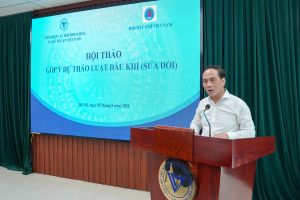
According to Associate Professor Dr. Pham Ngoc Linh, the petroleum industry not only plays an important role in economic growth but also contributes to ensuring energy security and safeguarding national sovereignty at sea. (Photo: Tran Trung)
Associate Professor Dr. Pham Ngoc Linh emphasized that, for the Vietnam Union of Science and Technology Associations, consultation, social critique, and social assessment have always been among its core mandates. In recent years, the independent, objective, and scientifically grounded analyses and recommendations provided by the intellectual community have made a positive contribution to the legislative process and policy formulation.
With regard to the draft amended Petroleum Law, Associate Professor Dr. Pham Ngoc Linh stated that the review and consultation process should focus on three key areas. First, it is necessary to examine the consistency and coherence of the Petroleum Law with other relevant legislation, such as the Investment Law and the Law on State Capital Management and Investment in Enterprises. Second, the feasibility of the proposed provisions should be assessed, while sufficiently robust mechanisms should be introduced to attract both domestic and foreign investment, particularly for petroleum projects, small and marginal fields, and emerging energy sectors. Finally, the draft should ensure a sound scientific basis, align with international practices, and incorporate modern governance trends, digital transformation, environmental protection, and sustainable development.
Dr. Nguyen Quoc Thap noted that the draft amended Petroleum Law is a piece of legislation of particular importance to the petroleum industry, as well as to the tasks of ensuring energy security, developing the maritime economy, and enhancing national competitiveness in the context of the global energy transition.
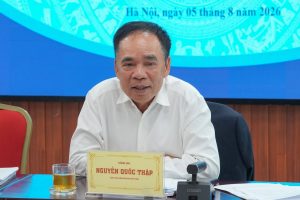
Dr. Nguyen Quoc Thap, Chairman of the Vietnam Petroleum Association, stated that the draft amended Petroleum Law is a piece of legislation of particular importance to the petroleum industry and to the task of ensuring energy security. (Photo: Tran Trung)
According to him, the draft Law represents an important shift from a direct management approach toward greater decentralization and delegation of authority, granting more autonomy to the Vietnam National Industry and Energy Group (Petrovietnam) and entities directly engaged in petroleum operations. However, the key issue is not merely the delegation of authority, but ensuring that the powers granted can be effectively exercised in practice. Therefore, the Law should further refine its implementation mechanisms, clearly delineate responsibilities between state management agencies and Petrovietnam, ensure consistency with relevant legislation, and, in particular, regard practical feasibility as a key criterion in assessing the quality of the draft Law.

Mr. Dang Dinh Luyen, former Vice Chairman of the National Assembly’s Committee on Legal Affairs, provided comments on the draft amended Petroleum Law. (Photo: Tran Trung)
Contributing comments at the workshop, Mr. Dang Dinh Luyen, former Vice Chairman of the National Assembly’s Committee on Legal Affairs, expressed his agreement on the need to amend the Petroleum Law in order to institutionalize the Party’s policies and guidelines, ensure consistency across the legal system, and address shortcomings identified during its implementation.
According to him, the current draft still contains too many detailed provisions, whereas the prevailing approach to lawmaking is for laws to stipulate only fundamental principles, with specific matters delegated to the Government and competent authorities for further guidance. Therefore, the drafting body should continue reviewing and streamlining the provisions to ensure stability and flexibility in implementation.
He also proposed revising the provisions governing the application of the Petroleum Law in cases where it differs from other laws, in order to ensure consistency with the 2025 Law on the Promulgation of Legal Normative Documents. He further recommended clarifying the provisions on the application of foreign law and international petroleum industry practices. In addition, the regulations governing bidding requirements and contractor selection should be further refined to ensure compliance with the Constitution, while detailed criteria regarding financial capacity, technical capability, and experience should be delegated to the Government for further regulation.
Meanwhile, Dr. Phan Ngoc Trung, Head of the Advisory and Review Committee of the Vietnam Petroleum Association, assessed that the draft amended Petroleum Law represents significant progress compared with the 2022 Petroleum Law, reflecting a clear reform-oriented approach. However, to become a forward-looking piece of legislation with a vision extending to 2045–2050 and sufficiently competitive with countries possessing more developed petroleum industries, the draft needs to be further refined from a more strategic perspective.

Labor Hero Dr. Nguyen Hung Dung, Vice Chairman and Secretary General of the Vietnam Petroleum Association, provided comments on the draft amended Petroleum Law. (Photo: Tran Trung)
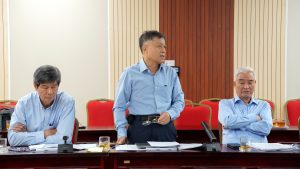
Dr. Phan Ngoc Trung, Head of the Advisory and Review Committee of the Vietnam Petroleum Association, provided comments on the draft amended Petroleum Law. (Photo: Tran Trung)
According to Dr. Phan Ngoc Trung, the Petroleum Law should not be limited to regulating petroleum exploration, appraisal, and production activities, but should evolve into a law governing the development of subsurface resources and the energy industry. He proposed adding principles to ensure a stable, transparent, and internationally competitive investment environment, while expanding the scope of regulation to cover emerging energy resources such as natural hydrogen and CO₂ storage.
He also emphasized the role of science and technology and digital transformation in the governance of the petroleum industry. Accordingly, the draft amended Petroleum Law should introduce provisions on the application of artificial intelligence, satellite data, geological modeling, high-performance computing, and the development of a digital petroleum database, recognizing petroleum data as a strategic national asset. In addition, investment incentive mechanisms should be further refined in a more flexible manner, with greater emphasis on risk sharing, enhanced oil recovery, the development of emissions-reduction technologies, and the establishment of regulatory sandboxes for emerging technologies. These measures would provide a legal foundation for the energy transition and enhance the long-term competitiveness of Vietnam’s petroleum industry.
Making Science, Technology, and Data New Drivers of Development
One of the issues that drew particular attention from experts at the workshop was the inclusion of provisions on science and technology, digital transformation, and data governance in the draft amended Petroleum Law.
Mr. Ngo Dinh Sang, Deputy Director General of the Department of Science and Technology under the Central Commission for Communication and Education, spoke highly of the role played by the Vietnam Union of Science and Technology Associations and its specialized associations in consultation and policy review. According to him, a key strength of the workshops organized by the Union is that their recommendations are grounded in practical experience, combining scientific foundations with management expertise, thereby providing high-quality, practical input that closely aligns with policymaking requirements. He also expressed his hope that experts and scientists will continue to leverage their knowledge and expertise to contribute to the development and refinement of the country’s policies and laws.

Mr. Ngo Dinh Sang, Deputy Director General of the Department of Science and Technology under the Central Commission for Communication and Education, spoke highly of the role played by the Vietnam Union of Science and Technology Associations and its specialized associations in consultation and policy review. (Photo: Tran Trung).
Regarding the draft amended Petroleum Law, Mr. Ngo Dinh Sang called for greater clarity on the role of science and technology, innovation, digital transformation, and artificial intelligence in the management, operation, and development of the petroleum industry. Accordingly, the Law should incorporate policies aimed at strengthening the country’s science and technology capabilities, developing a highly skilled workforce, and encouraging the development and mastery of homegrown technologies.
Regarding the management of petroleum information and data, Mr. Ngo Dinh Sang recommended incorporating principles for the controlled application of artificial intelligence, ensuring auditability and traceability, maintaining human oversight, and clearly defining the responsibilities of AI users. At the same time, AI-generated outputs should not be used as the sole basis for decisions concerning safety, the environment, reserves, financial obligations, national sovereignty, or national security.
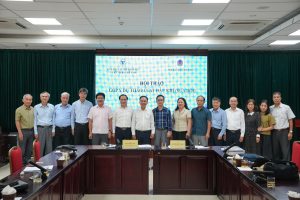
The workshop brought together leaders of regulatory authorities, scientists, and leading experts to discuss, review, and provide comments on the draft amended Petroleum Law. (Photo: Tran Trung).
He also proposed adding prohibited acts, such as unauthorized access to, appropriation, disclosure, or interference with petroleum data. In addition, he recommended establishing a national petroleum database designed to ensure interoperability with other relevant databases, while clearly defining data standards, data-sharing mechanisms, access rights, and cybersecurity requirements.
Many experts attending the workshop also emphasized that the Petroleum Law needs to be further refined to address existing challenges while establishing a solid legal foundation for the industry’s development over the coming decades. This requires not only coherent, feasible, and stable regulations, but also sufficient space for innovation, the adoption of new technologies, modern data governance, and the advancement of the energy transition. These efforts will help strengthen the competitiveness of Vietnam’s petroleum industry amid deeper international integration.